
Engineering · Design & experiment
An ultrasonic microreactor.
A university team project to design, build, and test a continuous reactor—and investigate how ultrasound changes the reaction inside it.
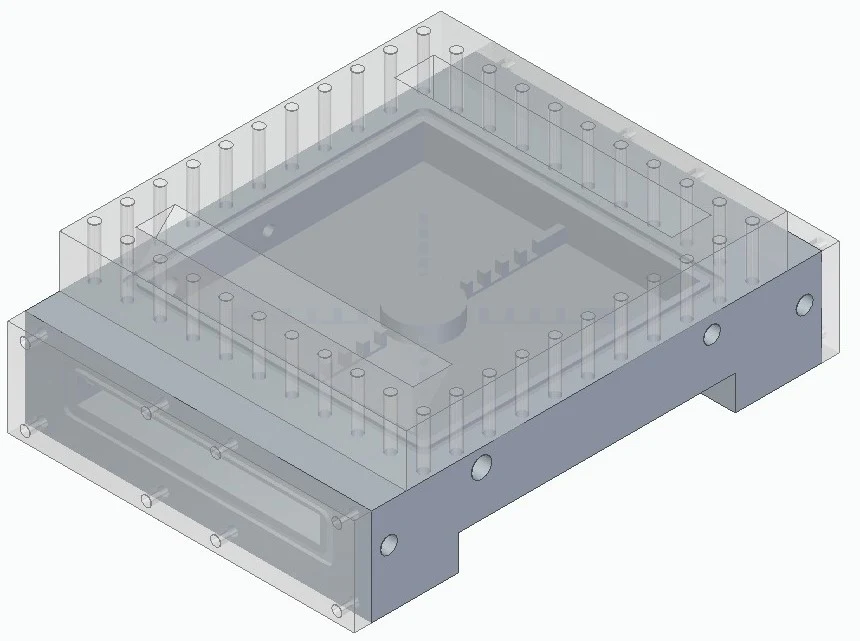
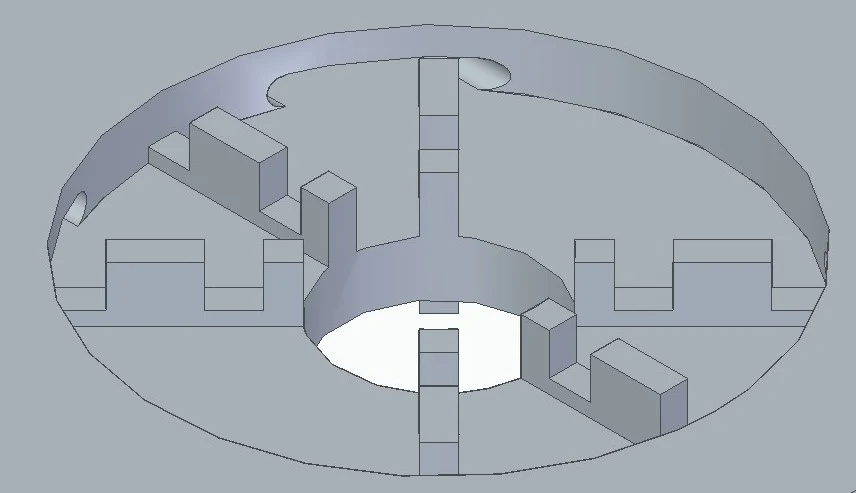
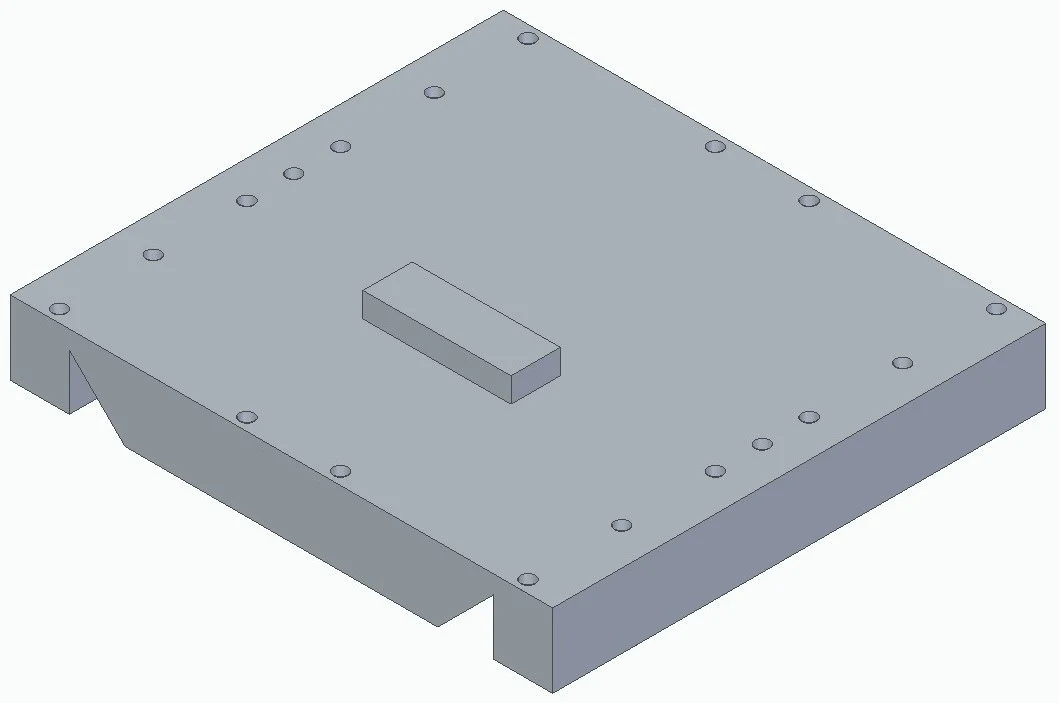
Explore three details of the design using the buttons above. CAD views from our project report.
The problem
Helping two liquids react.
The project studied a reaction between an organic phase and a water-based phase. Because the liquids do not mix readily, bringing them into contact is important. Our task was to investigate a continuous-flow approach assisted by ultrasound, and compare it with a batch experiment.
The reaction takes place inside narrow tubing arranged in a spiral. The spiral keeps a useful length of tubing within the active region above the transducer.
A design decision
Keeping the tubing in contact.
The tubing needs contact with the supporting structure for ultrasonic vibrations to reach it effectively. The inner turns of the spiral did not sit against the contact points as intended.
The design was revised by adding a plate to the underside of the plexiglass lid. It holds the tubing down against the supports. The revision addressed a practical assembly problem: keeping the spiral in place while maintaining contact with the supports.
Testing
From the drawing to the laboratory.
We compared operating conditions with and without ultrasound and cooling. The work included spectrophotometer calibration and concentration measurements, as well as thermal observations and temperature measurements to investigate cooling.
With ultrasound and both cooling systems operating, we measured a 98% yield at a residence time of 4 minutes 20 seconds. This result describes the reaction and operating conditions tested in our setup.
Project context
A shared build.
Completed for Problem Solving and Design 3 at KU Leuven with Laurens Matthijs, Caroline Rahier, Liam Statz, Staf Van Aelten, and Maud Van Mieghem.
Figures and experimental observations on this page are from our 2022–2023 final report, “Chemische discotheek — Ontwerp van een continue ultrasone reactor”.